
Breast cancer awareness: knowing what is normal for you, and when to get checked
Awareness is not about worry. It is about knowing your own body well enough to notice when something changes, and knowing where to go when it does. October is a good moment to take ten quiet minutes for that.
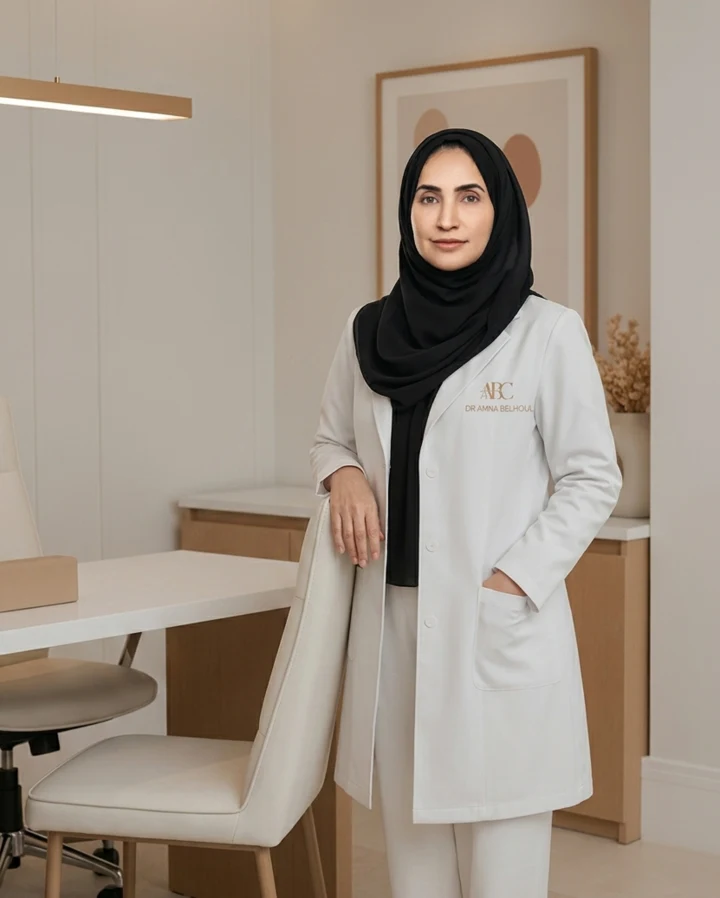
Written and medically reviewed by
Dr Amna Belhoul · Consultant Plastic & Reconstructive Surgeon

In short
- Breast awareness means knowing how your breasts usually look and feel, so that a change stands out. No special technique is needed.
- A new lump, a change in shape or skin, or a change in the nipple is worth showing to your doctor promptly. Many changes turn out to have a harmless cause, and a check is how you find out.
- Screening with mammography is for women without symptoms, and is arranged through your doctor or the UAE screening programmes. Your doctor will advise when to start.
- ABC does not carry out screening or breast diagnosis. If you have a concern, your first step is your doctor.
Every October, Breast Cancer Awareness Month brings pink ribbons, campaigns and a great deal of advice. Underneath all of it sit two simple habits: paying attention to your own body, and keeping up with screening when it is offered to you.
This article is about those two habits. It is written to help you know what to look for and where to go, not to alarm you. It is general information and does not replace advice from a doctor who knows your history.
Knowing what is normal for you
There is no single normal breast. Breasts differ in size, shape and feel from one woman to the next, and often one side is a little different from the other. Many women have breasts that feel naturally lumpy or uneven. What matters is what is normal for you.
Breasts also change through life. Many women notice tenderness or swelling before a period that settles afterwards, and pregnancy, breastfeeding and menopause all change how the breasts look and feel. Knowing these patterns makes a change that does not fit them easier to notice.
You do not need a set method or a fixed day. Looking in the mirror now and then, and feeling your breasts in the shower or while dressing, is enough. Include the area up to the collarbone and into the armpit, as breast tissue extends there too.
Changes to have checked promptly
If you notice any of the following, make an appointment with your doctor. It does not need to be an emergency visit, but it should not wait for the next routine check either.
- A new lump or a thickened area in the breast or armpit, even if it does not hurt
- A change in the size or shape of one breast
- Skin changes: dimpling, puckering, redness, or a texture like orange peel
- A nipple that has newly turned inwards, or a rash, crusting or scaling on or around it
- Discharge from the nipple when you are not breastfeeding, particularly if it is bloody
- Pain or discomfort in one area that does not come and go with your cycle
- Swelling in the armpit or around the collarbone
Thinking about reconstruction, now or later?
When the time is right for you, Dr Amna Belhoul can talk through breast reconstruction at our clinic in Mirdif Hills, at your own pace and alongside your oncology team.
What usually happens at the check
Your family doctor or gynaecologist will ask about the change and your history, and examine both breasts and the armpits. Depending on what they find, they may reassure you, ask to see you again at a different point in your cycle, or refer you for imaging such as an ultrasound or a mammogram.
A referral for imaging or to a breast clinic is a normal step to get a clear answer. It does not mean that something serious has been found.
Screening: for when you have no symptoms
Screening is different from having a change checked. It is for women who feel well and have noticed nothing, and its purpose is to find changes before they can be felt. The main screening test is a mammogram, a low-dose X-ray of the breast.
In the UAE, routine mammography screening is generally offered to women from around their forties, at regular intervals. It is arranged through your family doctor, a primary health care centre or the national and emirate screening programmes. Your doctor will advise when to start and how often, based on your age and history.
If close relatives have had breast or ovarian cancer, tell your doctor. A family history may mean screening starts earlier, is done differently, or that a referral for genetic advice is offered. Your doctor is the right person to weigh this up with you.
Where our clinic fits
Dr Amna Belhoul Medical Center does not carry out breast screening, mammograms or the diagnosis of breast conditions. If you have a concern, start with your family doctor, gynaecologist or a breast clinic. That is the quickest route to the right tests.
For women who have been through breast cancer treatment, breast reconstruction may become a conversation later, once the time is right for you. Dr Amna Belhoul, a plastic and reconstructive surgeon with a long involvement in breast-cancer awareness, sees women for that conversation, and our breast reconstruction page explains it.
Frequently asked questions
How often should I check my breasts?
There is no fixed schedule. What helps is getting to know how your breasts usually look and feel, and noticing when something is different. Some women find it easiest to check at the same point in their cycle, when breasts are less tender.
I found a lump. Does that mean it is cancer?
Not necessarily. Many lumps turn out to be harmless, such as cysts or areas of normal glandular tissue. A new lump should still be checked by your doctor promptly, because that is the only way to know what it is.
When should I start having mammograms?
Your doctor will advise when to start and how often, based on your age, your history and current UAE guidance. In the UAE, routine screening is generally offered from around your forties, and a family history may mean starting earlier.
Is a mammogram painful?
The breast is pressed between two plates for a few seconds to get a clear image. Many women find this uncomfortable, and how it feels differs from person to person. Booking it outside the days just before your period can make it more comfortable.
Can men get breast cancer?
Yes, although it is much less common than in women. A lump behind the nipple, a nipple change or discharge in a man should also be checked by a doctor.
Does Dr Amna Belhoul Medical Center offer breast screening?
No. Screening and the diagnosis of breast changes are arranged through your family doctor, a gynaecologist, a breast clinic or the UAE screening programmes. Our clinic sees women later, if breast reconstruction becomes part of their plan.
Written and medically reviewed by
Dr Amna Belhoul
Consultant Plastic & Reconstructive Surgeon
Know what is normal for you, have any new change checked without waiting, and keep up with screening when your doctor advises it. Calm attention does more than worry.
This article is general information, not medical advice, and does not replace an individual assessment. Results and suitability vary from person to person.
Related treatments
Consultations
Book your private consultation
Message us on WhatsApp or call the clinic, our team will help you find a time that suits you, in confidence.